
Nov 1, 2026
Complete Makeup Product Knowledge for OEM & Private Label Buyers
Learn professional makeup product knowledge for lipstick, eyeshadow, and liquid blush. Master formulas, quality standards, and defect checks for bulk OEM and private label orders.
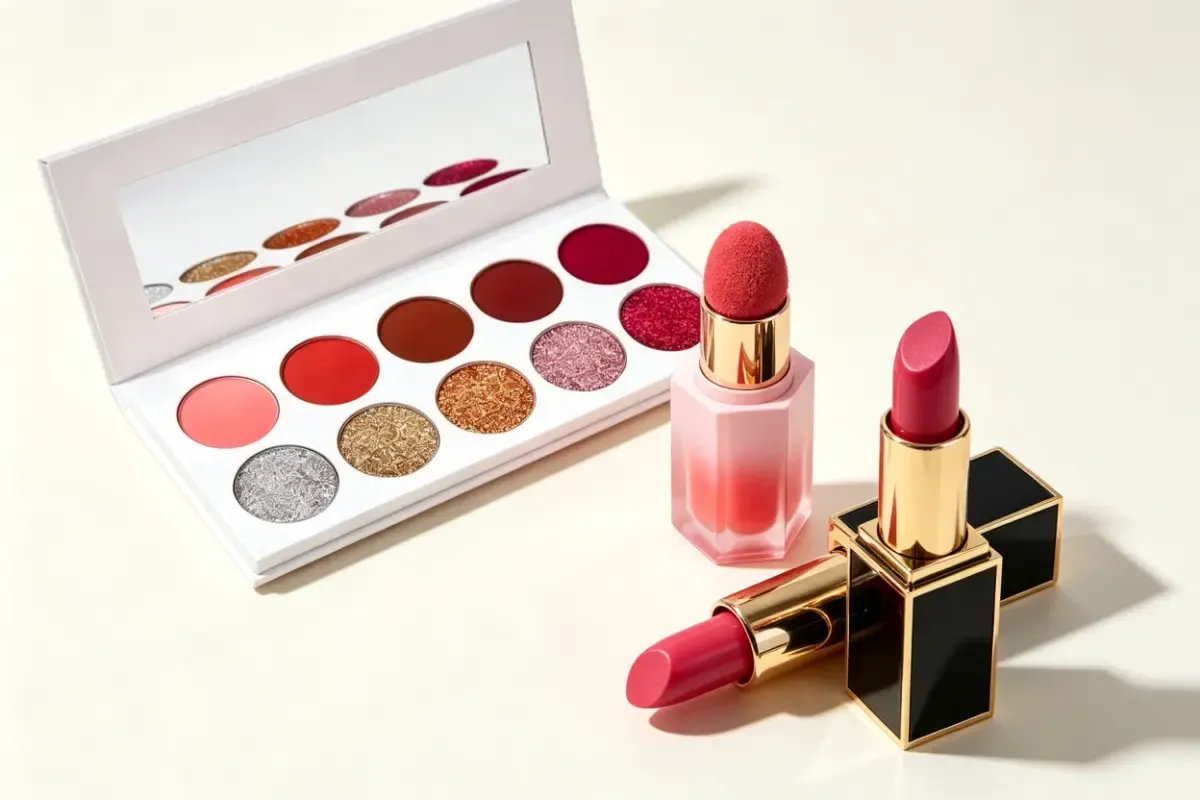
When sourcing mixed makeup products for wholesale and private label business, most new buyers only compare colors and prices. Without professional product knowledge, it is easy to receive unstable batches, high return rates, and inconsistent customer feedback. Understanding the core formula, texture differences, and common quality defects helps global resellers select reliable makeup items and cooperate with factories more smoothly.
Core Formula & Texture Differences of 3 Main Makeup Categories
Lipstick, eyeshadow, and liquid blush are the most popular face and lip makeup items for OEM bulk orders. Each category adopts a completely different production formula and texture system, leading to distinct market positioning and user groups.
Matte lipstick uses a classic wax-oil blending formula. The proportion of vegetable wax, mineral wax, and skin-care oil determines the smoothness, color uniformity, and moisturizing degree. High-quality matte lipstick balances strong color payoff and comfortable wearing experience, avoiding overly dry and cracked lip lines. Suitable for daily wear, business makeup, and formal occasions, 12-colors matte lipstick is one of the most stable bulk makeup items for cross-border wholesale.
Eyeshadow belongs to pressed powder makeup. Its formula includes cosmetic pigment, pearlescent powder, soft binder, and skin-friendly filler materials. The high-pressure pressing technology directly affects powder compactness, color rendering, and fallout situation. Professional multi-color eyeshadow palettes need uniform color distribution and durable texture. The 10-shade eyeshadow palette combines matte and shimmer shades, adapting to daily casual makeup and party creative makeup for global end consumers.
Different from traditional powder blush, liquid blush adopts water-based and silicone-based lightweight formula. It features quick-drying, skin-fitting, and natural color rendering effects. Liquid blush will not cake or float on foundation, which is more friendly for novice makeup users and hot and humid market areas. The matte jelly texture presents a soft velvet finish, making the matte jelly liquid blush a trending item for updated private label makeup lines.
Global Cosmetic Compliance & Safety Standards
Different countries and regions have strict access standards for imported makeup products. Before placing bulk OEM orders, buyers must confirm ingredient compliance and qualification documents to avoid customs detention and sales risks.
European markets require complete CPNP registration, cosmetic safety assessment reports, and restricted ingredient detection records. The American market focuses on FDA ingredient regulations and color additive safety standards. Lip makeup products have stricter inspection standards because of direct oral contact, while eye makeup pays more attention to irritation-free and anti-allergy tests.
Qualified makeup manufacturers can provide complete MSDS, COA, and batch test reports. For long-term private label brands, stable formula safety is the core of repeated customer purchases and brand reputation accumulation.
Common Quality Defects in Sampling & Bulk Production
Sampling inspection is the key step to avoid mass quality problems. Professional buyers need to check typical defective problems of different makeup products before mass production.
For matte lipstick: common defects include uneven color filling, surface oil separation, dry texture, poor color adhesion, and easy fading. Long-term storage environment changes may also cause lipstick softening, deformation and color difference.
For eyeshadow: typical problems cover serious powder fallout, hard pan failure, uneven pressing texture, obvious color difference between different shades, and poor color blending performance.
For liquid blush: layered liquid separation, bottle mouth clogging, uneven coloring, easy oxidation and color change after opening are frequent quality issues.
All potential defects can be optimized and adjusted through formula improvement and production process standardization in advance.
Target Market Matching Suggestions for Mixed Makeup
Different makeup textures and styles correspond to different regional market preferences. European and American markets prefer high-saturation matte makeup with strong color contrast, suitable for party makeup and personal styling. Southeast Asian, African and Middle Eastern markets favor high-color, durable and affordable bulk makeup products with high cost performance.
Retail store sellers can match versatile neutral color systems to maintain stable daily sales, while social media resellers can match trendy new textures and popular shades to create viral makeup works and improve exposure.
Conclusion
Professional makeup product knowledge is the basic premise of stable bulk procurement and brand operation. By mastering formula characteristics, safety standards and quality inspection points, OEM and private label buyers can effectively avoid procurement risks and select high-quality hot-selling makeup combinations. Matching suitable products according to target market demands will greatly improve sales conversion and long-term cooperative efficiency.